6 minute read · October 1, 2026
Koi pond care through a South Florida year
Palm Beach County ponds skip the frozen winter and get a long hot summer instead. Season by season: heat and oxygen, rainy-season runoff, hurricane prep, cool-front feeding, spawning and the predators that visit at dawn.
Summer is the hard season
Up north a pond's danger is ice. Here it is heat. Warm water holds less oxygen, and a pond at 88 degrees with a dozen big koi and a weak air pump can lose fish overnight with no warning. Summer means aeration running around the clock, shade over at least part of the surface from plants or a sail, and never cleaning the filter and doing a large water change on the same hot afternoon.
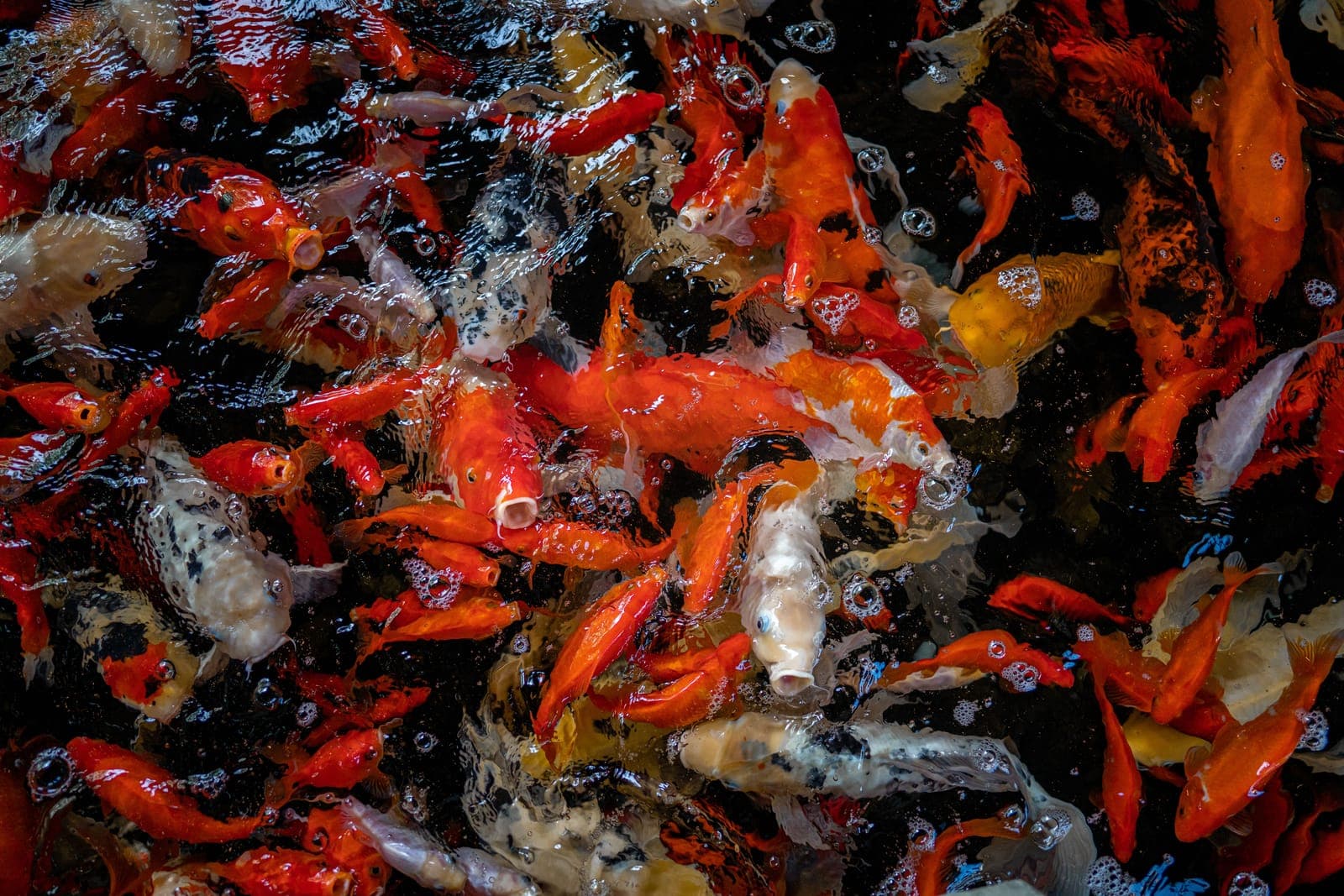
Feed in the morning and evening when the water is cooler and skip feeding entirely on days over 90. Koi are always happy to eat. They are not always able to digest.
Rainy season and runoff
The afternoon storms from June to October do two things to a pond. They dump a lot of soft, acidic rain that can move pH fast, and they wash fertilizer, mulch and dirt off the lawn and into the water. A pond in Wellington or Royal Palm Beach with a grass slope running toward it gets a dose of lawn fertilizer with every storm, which is exactly the fuel string algae wants.
A lip or a planted edge that keeps runoff out does more for water quality than any chemical. After a very heavy rain, test and skim the surface, and check that the overflow is clear so the pond drains where it is supposed to and not into the house.
Try it on your tank
Hurricane season
The pond has the same two problems as a tank in a storm, no power and debris, plus a third: it can flood. Before a storm, lower the level a few inches, pull or secure anything that can blow in, and have a battery air pump ready. After, net out leaves and branches before they rot, test ammonia, and expect the water to go cloudy and then clear over a week as the filter catches up. Power can be out for days, and koi survive that far better with air than with a running pump that does nothing.
The cool fronts
December through February brings a handful of nights in the 40s, and the western communities cool off more than the coast. Koi slow down below 60 degrees and their digestion slows faster than their appetite. Switch to a wheat germ food and feed less when the water drops into the 50s, and skip a day entirely after a front. The pond does not need to be shut down; it needs you to stop feeding like it is July.
Spring spawning and visitors
As the water warms through March and April, koi spawn. It looks like a fight at dawn, the water goes milky from the eggs, and ammonia can spike. A water change the next day settles it. Spring also brings the herons, and raccoons and otters are year-round, so a pond with nowhere for the fish to hide loses fish. Depth, overhangs and a few tunnels of pipe on the bottom are the real defense.
What a service visit covers
Skimmer and filter cleaning, a proper water change with dechlorinated water, string algae removal, pump and UV checks, a look at every fish for ulcers or clamped fins, and water testing written down. Ponds in Boca Raton, Delray Beach and Wellington are part of Jason's regular route, on a schedule set by the season, more often in the hottest months.
The short version
Oxygen in summer, runoff in the rain, air during a storm, lighter feeding on cool nights, and hiding places all year.